“I began to recall what I had heard of dead men, troubled in their graves by the violation of their last wishes, revisiting the earth to punish the perjured and avenge the oppressed” (12).
Brontë again brings in the supernatural when Jane is locked in the bedroom that her uncle died in. Jane hopes and believes that her uncle’s spirit may come and avenge his troubled niece’s woes. During the era that Jane Eyre takes place, many people strongly believed in troubled spirits staying on earth until revenge is obtained. By bringing the supernatural into her novel, Brontë establishes a surreal setting that appeals to readers who believe in ghosts and spirits.
Sunday, November 30, 2008

Apothecary vs. Physician

“I scrutinized the face of the gentleman: I knew him; it was Mr. Lloyd, an apothecary, sometimes called in by Mrs. Reed when the servants were ailing: for herself and the children, she employed a physician” (14).
During the 19th century, an apothecary’s role was similar to a physician’s, but they did not receive the same training and education that a physician did. The first apothecaries simply distributed drugs to physicians, an act now practiced by pharmacists. Eventually, apothecaries began giving medical advice to patients who were unable to afford a physician. Brontë again contrasts the two social classes living in the home of Mrs. Reed. For the lesser servants and Jane, she employs an apothecary who is unable to provide the same level of service and care as a physician, yet for herself and her children, she employs a physician, which shows that she cares more about her family than her servants.
During the 19th century, an apothecary’s role was similar to a physician’s, but they did not receive the same training and education that a physician did. The first apothecaries simply distributed drugs to physicians, an act now practiced by pharmacists. Eventually, apothecaries began giving medical advice to patients who were unable to afford a physician. Brontë again contrasts the two social classes living in the home of Mrs. Reed. For the lesser servants and Jane, she employs an apothecary who is unable to provide the same level of service and care as a physician, yet for herself and her children, she employs a physician, which shows that she cares more about her family than her servants.
Works Cited: "Apothecary." Nation Master. 30 Nov. 2008 http://www.nationmaster.com/encyclopedia/apothecary

Bird of Admiration

“Bessie had been down into the kitchen, and she brought up with her a tart on a certain brightly painted china plate, whose bird of paradise, nestling in a wreath of convolvuli and rosebuds, had been wont to stir in me a most enthusiastic sense of admiration” (16).
Bird of paradise is a tropical bird found in New Guinea and surrounding isles. It is also a flower native to South America named for its resemblance to the bird. Jane’s description of the plate does not make it clear whether it is the bird or the flower that decorates the plate, but her affection for birds expressed earlier in the novel makes the bird more likely. Her adoration for an out of place bird trapped on a plate shows her feelings for her present surroundings. Brontë shows Jane’s desire to be content in her surroundings; the bird is pleased to be wrapped “in a wreath of convolvuli and rosebuds” and Jane wishes to feel the same.
Bird of paradise is a tropical bird found in New Guinea and surrounding isles. It is also a flower native to South America named for its resemblance to the bird. Jane’s description of the plate does not make it clear whether it is the bird or the flower that decorates the plate, but her affection for birds expressed earlier in the novel makes the bird more likely. Her adoration for an out of place bird trapped on a plate shows her feelings for her present surroundings. Brontë shows Jane’s desire to be content in her surroundings; the bird is pleased to be wrapped “in a wreath of convolvuli and rosebuds” and Jane wishes to feel the same.
Works Cited:
Park-Brown, Sydney G. "Bird-of-Paradise." EDIS. University of Florida IFAS Extension. 30 Nov. 2008 http://edis.ifas.ufl.edu/mg106.
"Bird of Paradise." How Stuff Works. 22 Apr. 2008. 30 Nov. 2008 http://animals.howstuffworks.com/birds/bird-of-paradise-info.htm
Infantine Fawkes

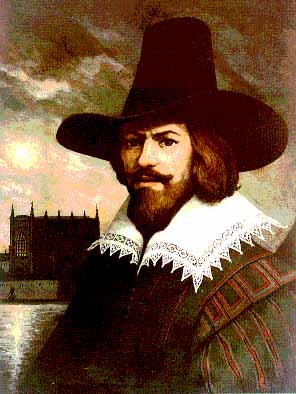
“Abbot, I think, gave me credit for being a sort of infantine Guy Fawkes” (22).
Guy Fawkes was the first member in a group of conspirators caught having planted gunpowder in a cellar room under Parliament. Fawkes was extremely xenophobic and claimed that he wanted to “blow the Scotsman present back to Scotland” (Herber). Abbot compares Jane to Guy Fawkes because both were believed to constantly scheme up plots, though there is no proof that either ever did. Brontë uses a real person that was well known during the 19th century to show how Jane’s acquaintances feel about her. It also shows that Jane is intelligent if she knows about a man that died 200 years before her birth and understands what he is infamous for.
Guy Fawkes was the first member in a group of conspirators caught having planted gunpowder in a cellar room under Parliament. Fawkes was extremely xenophobic and claimed that he wanted to “blow the Scotsman present back to Scotland” (Herber). Abbot compares Jane to Guy Fawkes because both were believed to constantly scheme up plots, though there is no proof that either ever did. Brontë uses a real person that was well known during the 19th century to show how Jane’s acquaintances feel about her. It also shows that Jane is intelligent if she knows about a man that died 200 years before her birth and understands what he is infamous for.
Works Cited: Herber, David. "Guy Fawkes: A Biography." Britannia History. Britannia. 30 Nov. 2008 http://www.britannia.com/history/g-fawkes.html
Liars in the Lake

“ ‘Deceit is, indeed, a sad fault in a child,’ said Mr. Brocklehurst; ‘it is akin to falsehood and all liars will have their portion in the lake burning with fire and brimstone’ ” (31).
Brontë references the biblical lake of fire and brimstone where those who have committed wicked crimes are sent after death. This is meant to scare Jane to keep her from lying, but it also adds to the theme of religion that is constantly present throughout the novel. Religion was an important concept during the 19th century, and Brontë shows this with her allusions to the Bible and other religious works.
Brontë references the biblical lake of fire and brimstone where those who have committed wicked crimes are sent after death. This is meant to scare Jane to keep her from lying, but it also adds to the theme of religion that is constantly present throughout the novel. Religion was an important concept during the 19th century, and Brontë shows this with her allusions to the Bible and other religious works.
Works Cited: Eby, J. Preston. "The Lake of Fire." Freedom in Messiah. 30 Nov. 2008 http://www.freedominmessiah.com/lake_of_fire.html

Babel of Tongues

“Discipline prevailed: in five minutes the confused throng was resolved into order, and comparative silence quelled the Babel clamour of tongues” (45).
Again, Brontë references the Bible, this time with a story from Genesis. The Tower of Babel was a tower to Heaven built by men who spoke the same language. God interfered with the building of the tower by giving the men different languages, inhibiting their ability to understand each other, and scattering them throughout the Earth. Brontë compares the school full of young girls to the Tower of Babel to show how varying the girls are and how difficult it is to quell the uproar.
Again, Brontë references the Bible, this time with a story from Genesis. The Tower of Babel was a tower to Heaven built by men who spoke the same language. God interfered with the building of the tower by giving the men different languages, inhibiting their ability to understand each other, and scattering them throughout the Earth. Brontë compares the school full of young girls to the Tower of Babel to show how varying the girls are and how difficult it is to quell the uproar.
Works Cited:
Dolphin, Lambert. "The Tower of Babel and the Confusion of Languages." 16 Apr. 2000. 30 Nov. 2008 http://ldolphin.org/babel.html
Maas, Anthony. "Tower of Babel." The Catholic Encyclopedia. Vol. 15. New York: Robert Appleton Company, 1912. 30 Nov. 2008 http://www.newadvent.org/cathen/15005b.htm.
Photo Credit: http://ldolphin.org/babel.html
Highlander's Frock

“with little pockets of Holland (shaped something like a Highlander’s purse) tied in front of their frocks” (45).
A Highlander was a Scottish soldier; his purse was a small bag tied to a belt that held small treasures and valuables. The more affluent soldiers decorated their purses with silver tops and tassels to show their wealth. Brontë compares the pockets of the girls’ frocks to a Highlander’s purse to show that they do not have much personal property at the school for orphans. Jane had never been around orphans other than herself, and she is startled to see dozens of girls all dressed the same.
A Highlander was a Scottish soldier; his purse was a small bag tied to a belt that held small treasures and valuables. The more affluent soldiers decorated their purses with silver tops and tassels to show their wealth. Brontë compares the pockets of the girls’ frocks to a Highlander’s purse to show that they do not have much personal property at the school for orphans. Jane had never been around orphans other than herself, and she is startled to see dozens of girls all dressed the same.
Works Cited: "Highland Dress For Men." Scottish Tartans Authority. Scottish Tartans Authority. 30 Nov. 2008 http://www.tartansauthority.com/web/site/highland_dress/highland_dress.asp
Subscribe to:
Posts (Atom)