Tuesday, August 26, 2008
Heart of Darkness by Joseph Conrad
Heart of Darkness is a novella written during the late 19th century that tells of a man's journey deep into the interior of the Congo of Africa. Marlow, the main character tells his shipmates of his experiences working for a Belgian ivory company during the time of Imperialist expansion into Africa. His story is told in a stream of consciousness style, and most of his tale revolves around the infamous Mr. Kurtz, an agent for the ivory company deep in the wilderness. When Marlow finally meets Kurtz, he is quite confused and disappointed.

Send Me to Graves End

“The air was dark above Gravesend, and farther back still seemed condensed into a mournful gloom, brooding motionless over the biggest, and the greatest, town on earth” (3).
Gravesend is a town located on the south banks of the Thames in Kent, England. Throughout the history of the town, it has played a vital role in England’s commerce and trade industry. The close relationship between Gravesend and the river Thames has allowed the economy of the town and, in some cases, the country as well, to prosper.
Gravesend is a town located on the south banks of the Thames in Kent, England. Throughout the history of the town, it has played a vital role in England’s commerce and trade industry. The close relationship between Gravesend and the river Thames has allowed the economy of the town and, in some cases, the country as well, to prosper.
Photo Credit: http://thames.me.uk/s00010_files/gravesend2.jpg
Architecture Dominoes

“The Accountant had brought out already a box of dominoes, and was toying architecturally with the bones” (3).
Dominoes is a game played with small tiles traditionally made out of ivory or small bones. Originally started in China, the game traveled to Europe through the Silk Road, and the Europeans’ added their adaptations to it, modernizing the style to the way it is today. Many variations of the game can be played, but the classic game involves matching the tiles in a chain form.
Dominoes is a game played with small tiles traditionally made out of ivory or small bones. Originally started in China, the game traveled to Europe through the Silk Road, and the Europeans’ added their adaptations to it, modernizing the style to the way it is today. Many variations of the game can be played, but the classic game involves matching the tiles in a chain form.
Works Cited: http://www.gamecabinet.com/rules/DominoIntro.html
Sir John Francis Drake Franklin
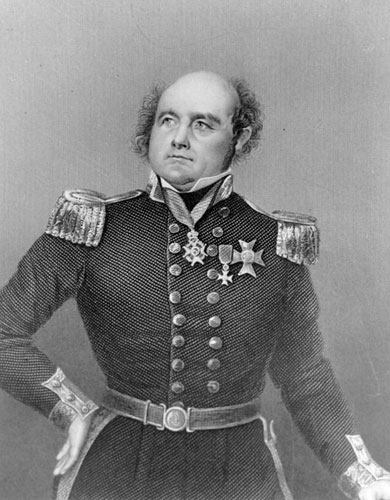
“It had known and served all the men of whom the nation is proud, from Sir Francis Drake to Sir John Franklin, knights all” (4).
Sir Francis Drake was a sailor from the 16th century who took a small fleet of ships on a lengthy voyage that was supposed to take them into the Nile River, but their true destination was the Pacific Ocean. After losing most of his fleet, he eventually circumnavigated the globe taking three years and accumulating approximately 36,000 miles on his ship.
Sir John Franklin led an expedition into the Arctic during the 19th century that proved to be quite dangerous. Leading his 129 men into the Arctic, he searched for a passage across the top of the North American continent. After years without word from the explorers, search expeditions were sent out to find the missing voyagers; the search crews discovered bodies of several crewmembers frozen in the ice.
Sir Francis Drake was a sailor from the 16th century who took a small fleet of ships on a lengthy voyage that was supposed to take them into the Nile River, but their true destination was the Pacific Ocean. After losing most of his fleet, he eventually circumnavigated the globe taking three years and accumulating approximately 36,000 miles on his ship.
Sir John Franklin led an expedition into the Arctic during the 19th century that proved to be quite dangerous. Leading his 129 men into the Arctic, he searched for a passage across the top of the North American continent. After years without word from the explorers, search expeditions were sent out to find the missing voyagers; the search crews discovered bodies of several crewmembers frozen in the ice.
Works Cited:
"The Disastrous Expedition of Sir John Franklin." ESSORTMENT. 25 Aug. 2008 http://www.essortment.com/all/sirjohnfrank_reib.htm
"The Franklin Expedition." The Victorian Web. 27 Mar. 2002. 24 Aug. 2008 http://www.victorianweb.org/history/franklin/franklin.html
Seeler, Oliver. "Francis Drake the Voyage." Sir Francis Drake. 1996. 24 Aug. 2008 http://www.mcn.org/2/oseeler/voy.htm
Terror of the Golden Erebus Hind
Golden Hind
Works Cited:
"The Voyage." Golden Hind. 25 Aug. 2008 http://www.goldenhind.co.uk/education/worksheets/voyage.html

“It had borne all the ships whose names are like jewels flashing in the night of time, from the Golden Hind returning with her round flanks full of treasure, to be visited by the Queen’s Highness and thus pass out of the gigantic tale, to the Erebus and Terror, bound on other conquests—and that never returned” (4).
The Golden Hind is the only ship of Sir Francis Drake’s that survived his three-year voyage around the globe. When it returned to England, its holds were full of treasures from every corner of the world, their value totaling an estimated £600,000 in 1580 (equivalent to around £25 million today).
The Erebus and the Terror were the two ships that Sir John Franklin commandeered when searching for the Northwest Passage. Neither ship returned to docks in England.
The Golden Hind is the only ship of Sir Francis Drake’s that survived his three-year voyage around the globe. When it returned to England, its holds were full of treasures from every corner of the world, their value totaling an estimated £600,000 in 1580 (equivalent to around £25 million today).
The Erebus and the Terror were the two ships that Sir John Franklin commandeered when searching for the Northwest Passage. Neither ship returned to docks in England.
Works Cited:
Ward, Paul. "Erebus and Terror, Ships of the Antarctic Explorers." Cool Antartica. 17 Aug. 2008. 25 Aug. 2008 http://www.coolantarctica.com/antarctica%20fact%20file/history/antarctic_ships/erebus_terror_franklin.htm
"The Voyage." Golden Hind. 25 Aug. 2008 http://www.goldenhind.co.uk/education/worksheets/voyage.html

The Chapman Shone Strongly

“The Chapman lighthouse, a three-legged thing erect on a mud-flat, shone strongly” (4).
Built in 1849, the Chapman lighthouse was the last of the lighthouse to be built on the Thames River. It served as a great tool during both world wars, providing guidance to the many ships assembling forces on the river. In Heart of Darkness, the light produced by the lighthouse symbolizes civilization, as Marlow refers to the uncivilized areas as “darkness.”
Built in 1849, the Chapman lighthouse was the last of the lighthouse to be built on the Thames River. It served as a great tool during both world wars, providing guidance to the many ships assembling forces on the river. In Heart of Darkness, the light produced by the lighthouse symbolizes civilization, as Marlow refers to the uncivilized areas as “darkness.”
Works Cited:
"London River Thames Lighthouses." 25 Aug. 2008 http://myweb.tiscali.co.uk/amphiaraus1/page7.html
Photo Credit: http://www.canveyisland.org/page_id__191_path__.aspx
Old Romans
“I was thinking of very old times, when the Romans first came here, nineteen hundred years ago” (5).
In 43 A.D., the Roman Empire expanded into what is today called England. Emperor Claudius sent men into southern England, which was quickly taken over by the Romans. This invasion lends to the first ever written history of England. Around 400 A.D. the Romans withdrew to defend their homeland, leaving England to fend for itself and prosper into the country it is today.
Works Cited:
"The Romans in Britain 43-410 AD." History-UK. 26 Aug. 2008 http://www.historic-uk.com/historyuk/england-history/romanengland.htm
In 43 A.D., the Roman Empire expanded into what is today called England. Emperor Claudius sent men into southern England, which was quickly taken over by the Romans. This invasion lends to the first ever written history of England. Around 400 A.D. the Romans withdrew to defend their homeland, leaving England to fend for itself and prosper into the country it is today.
Works Cited:
"The Romans in Britain 43-410 AD." History-UK. 26 Aug. 2008 http://www.historic-uk.com/historyuk/england-history/romanengland.htm
Subscribe to:
Posts (Atom)